Gokui no Utai

Tags :

Poema de los principios secretos. Encontrado en los pergaminos de Kukishin Ryû.

“No existe un pueblo en que la luz de la luna no brille,
pero en la mente del que mira parece que existe.
Los ligeros brillos de la luna caen sobre cada cosa.
Si sientes que no está brillando donde tu te encuentras,
es porque la mente del que está mirando está nublada.

Incluso la tierra lavada durante un diluvio,
dejándose llevar,
flotará en cualquier torrente.
Incluso la suciedad lavada llevada por un diluvio
flotará naturalmente en la superficie del agua.

Esto significa que aún cuando estás en una situación de desesperación,
si tu estado de ánimo es como el Sutemi,
proyectándote a lo lejos,
podrás encontrar una manera de vencer.

En todas las defensas que el cuerpo usa para mostrar valor,
el verdadero secreto es la mente.
Las posiciones del cuerpo parecen expresar la fuerza de cada uno
pero la verdadera fuerza está en el corazón.

¿No es el secreto o el poder hacer uso de la fuerza del enemigo, el corazón de un sauce en el viento?

Lo que es importante del camino marcial
es omitir el exceso de poder y usar la fuerza del oponente,
haciendo exactamente como las ramas del sauce
cuando son sopladas por el viento y oscilan sin tensión”

Keith Larman on Aikiken

The always recurring theme of Aikiken has given one of the most complete advice in an internet forum in AikiWeb.

Quoted here:

I tried very hard to avoid any implication of superiority of anything. I practice Aikiken myself, usually daily as a break from my work. I do, however, also believe that some questions give the appearance of being easily answerable while hiding a myriad of vastly more complex questions that are not being asked. This is was one of those for me. In my training there have been many times when I've asked the same question only to be told to keep practicing. Over time you begin to realize that the question asked was not really answerable as there were 1000 things unasked, each arguably more important than the one asked. Or maybe a better analogy for me is the solving of a rubic's cube. People will get one surface correct and then ask what to do next. They don't want to hear that they have to destroy everything they've accomplished to "fix" the whole thing.

The cut doesn't exist in isolation.

A person with an incorrect grip will pull their elbows out to the side causing them to not get correctly "behind" the tsuka. This makes it very difficult to get a straight cut. Fix the grip.

A person with a correct grip can still push out their elbows. With the elbows out the person cannot get behind the tsuka correctly during the cut. Keep the elbows in correctly.

A person with a correct grip and elbows in will often push the sword too far forward, basically pushing their shoulders out of proper alignment. As the arms come down the realignment of the shoulders being out of phase can cause wobble. Keep the shoulders correctly in place throughout the arc of the cut.

A person with incorrect alignment of the hips to their shoulders (hence to the target) will often find themselves rotating slightly during the cut causing the shoulders to come out of alignment. Fix the body alignment.

A person with poor posture will often have to compensate throughout the movement causing alignment issues.

Footwork is always an issue as too much movement in any one direction can cause the same issues of rotation within the body. Remember that power is generated from the one-point/hara/dantien/whatever and sent through the body. The sword cuts, you guide, and power is a result of the entire body. When that does not happen muscles have to compensate and it becomes extremely difficult to keep a consistent path to the sword.

Overextension in any part of the body tends to cause wobbles as balance is thrown off. Control, control, control.

Hand dominance is a constant issue. Often hints such as "focus on the left hand for power, right hand for guidance" are given to a person who needs that advice due to how they're swinging. The same advice to someone else will just make their cut worse. The reality is that the hands have to work together seamlessly with the entire body transmitting movement. So advice here usually has to be given very carefully depending on the person's needs.

For some a lighter sword will help fix issues, especially if they're throwing themselves off balance. Other times a heavier sword will make the difference for the exact same issues. Control is the underlying thing being addressed. Sometimes having a lighter sword allows the person to find the proper "groove" for cutting. Sometimes a heavier sword slows them down enough for them to find the proper "groove" for cutting. So YMMV.

Keep in mind that everything as described up above may be slightly different depending on what style you study. Some styles do bigger cuts, some smaller. Some slashing, some cleaving. Some are very fast with small movements, some are bigger, mean, cut them in half type things. Some emphasize being square (hips/shoulders) to the opponent, others not so much. Some emphasize foot alignment as well that is square, others not so much. Those changes alone will dramatically change how cuts are done. So each style will address most of the above issues slightly differently because each thing affects the other. The individual "tips" exist as part of a larger whole. What works with one will be absolutely wrong for another because internal consistency is what matters. Later styles of swordsmanship tended to emphasize draw/cut movements. Some earlier styles (some regional differences as well) will emphasize a slightly different grip which allows a more "leveraged" fast movement of the blade. Watch Toby Threadgill's demos on youtube with the sword. Compare how the sword moves with someone doing something like iai. Very different in subtle ways. Neither is incorrect. But each does what they do with an internal consistency that is critical to proper form.

In the end (after that long post) my point originally was that most advice regarding swordsmanship cries out for a larger context to ensure that the internal consistency is there. I do iai differently at times than I do my aikiken. Because they are different. And I've seen many aikiken demonstrations by high ranking people of many styles and there are more differences than similarities. Straightening out a cut depends on what you're doing wrong. What's "wrong" or "right" depends on who you study with and how they do things.

This is not an issue of superiority. I enjoy aikiken. I would not give advice to someone from another style, however, because I don't know what they might be doing wrong. Because I wouldn't know what is "right" in their style.

But yes, there are basic things. Smooth cut. Don't over muscle. Slow down. Get good extension without over-committing. For the rest? Ask your sensei to watch and fix what you're doing wrong.

Now I'm sure some think I'm being an elitist snob anyway (I get e-mail, yes, I get e-mail...) I don't think it is a highjack but an attempt to see the larger picture.

That said, please do not hesitate to put me in your ignore list. Or just scroll right past.

So please pardon the intrusion in your thread. I was trying to answer the OP's questions as sincerely as possible.

The author, Keith Larman, is a member of Seidokan Aikido as well as a sword expert and has published some very detailed articles on the matter.

Keith Larman became interested in Japanese sword crafts in the late 1970’s. In the 1990’s he began training in traditional methods of polishing and mounting of the Japanese sword. In 2002 he decided to devote himself full-time to the profession of polishing and mounting.

Iaido in Iwama

“I was uchideshi this year again for one month (tooooo short) and had the opportunity to learn Battojutsu directly from [Hitohiro Saito] Sensei. First, Sensei handed us the Iaito (the Tanrenkan has several) and told me, as the highest grade present, to practice suburi, and kumitachi. Since I did not know anything about it, I had to depend on Kasper (an excellent long time sotodeshi), and another day on Yasuhiro Saito, to teach me the Sekiguchi Ryu. About a week later, Sensei taught us directly with many details. It was a wonderful class. Sekiguchi Ryu is a ryu originally from Wakayama (O’Sensei’s country). It is a vigorous style with lots of kiai. We also practiced with live blades using some excellent swords that Sensei has.

One site where you can have a look at this Battojutsu style is bushinjuku.com.

It seems that Sensei has had a long connection with this style.”

Tristão da Cunha Sensei from Portugal.

Click here to view forum thread in Aikidojournal.

Aikido Principles

Just found this while surfing the web and thought it would be interesting to share.

Fudo Genri (Immovable principles)


Four points towards Body, Mind and Spirit unity...
  • Concentrate on seika tanden or center.
  • Mind, heart and body must relax.
  • Feel the Ki in any movement and extend it
  • Mushin (no mind, or stop thinking too much)

Kihon Genri (Basic Principles)


These are movement principles that follow the Aiki Law or Natural Universe Law.
  • Chushin: Center line. Always move from your own center line. Connect to uke and bring him into your center line. Do not move his center line separate from yours.
  • Shuchu: Focus power starting from the mind into the body.
  • Kokyu: Breath power, connecting the energy of the body and the physical aspects.
  • Enshin: Circular movement or more precisely, spiralling. You can spiral inwards or outwards.

Aiki Genri


Energy principles, essential in resolving conflict.
  • Awase: Blending, to harmonise with incoming force not to avoid or fight it. Body leads the mind.
  • Musubi: Connection, stage two of harmonising. Musubi can occur in many levels not just at the physical level. Mind leads the body.
  • Nagare: Fluid movement, there is no stop in movement or conflict. Joining with partners energy and moving synergistic-ally.
  • Takemusu Aiki: Unlimited manifestation of Aiki. This is a stage when you are living in harmony with the universe. Technique is not essential because your opponent cannot defeat you since he will be fighting himself.

Five Stages of Understanding Aiki

  • Aiki no Kokoro: Understand and belief within your heart the principles of Aiki.
  • Aiki no Genri: Know and understand the Aiki Principles.
  • Aiki no Waza: Embody the techniques of Aiki in training and life.
  • Aiki no Chikara: Resulting from training and embodiment of Aiki principles, achieve the power of Aiki.
  • Aiki no Seishin: True Aiki. Its 'switched on' without your active participation.

[Source: Aikihut]

Grab my wrist; no, really!

Tags : ,


One of the big problems people seem to have with Aikido is all the wrist grabbing. It seems silly and unnecessary if you come from a sport martial art school. If you’re into RBMA (reality based martial arts) then it seems only mildly useful, and only in self defense situations. Punching and kicking seem reasonable, headlocks, body to body clinching, these things are what martial arts should be about, right…

The biggest problem our martial art faces today, in terms of our ability to develop (as individuals and as a whole), is understanding what we are doing and why. There is so much confusion in our community as to what we are doing. Why do we practice such strange techniques? How does our system even work in a martial context?

Even if you are not interested in martial questions directly, this should be important to you. So you’ve never been in a fight, and don’t ever expect to be. You’re probably right, if you are a reasonable person, it’s unlikely that you will ever get into a fight. However even if you were never put in a position to “use” your martial arts training, this question is important to you. Not because of your ability to “use” Aikido outside of the dojo, but because of your ability to “use” Aikido inside of the dojo!

Para leer el artículo completo: aikidostudent.com

Fallece Kuroiwa Sensei

Kuroiwa Yoshio Sensei falleció el pasado 19 de Enero a causa de un cancer de pulmón y enfisema. Con su fallecimiento perdemos a otro de los grandes.
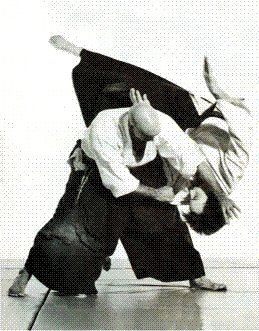
Ellis Amdur publica una nota en su memoria en: In Memory of Kuroiwa Yoshio.

Descanse en paz, Kuroiwa Sensei.

Transmission, Inheritance, Emulation (XVII)

Tras dos meses de impaciente espera, ya tenemos el capítulo 17 de Transmission, Inheritance, Emulation del Profesor Goldsbury.

¡Ahora a leer y a disfrutar!